

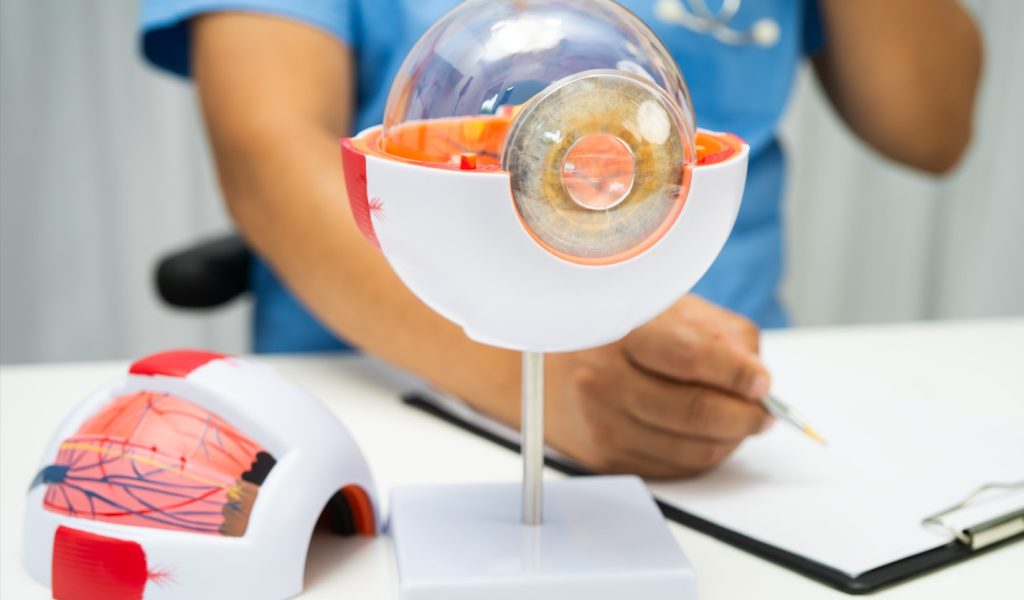
The evolution of intraocular lenses (IOLs) over the past 15 years has profoundly transformed cataract surgery, transitioning from a purely rehabilitative procedure to a high-precision refractive intervention. For the modern eye care professional, understanding the technological, biomechanical, and optical differences between each platform is essential to optimize visual outcomes and reduce refractive surprises. This article summarizes the most relevant aspects for current clinical practice, focusing on selection, clinical performance, and advanced surgical considerations.
1. Materials: Beyond "Hydrophilic" vs. "Hydrophobic"
The choice of material remains a determining factor in biocompatibility, capsular stability, and optical quality.
Hydrophobic (Acrylic)
- Extremely low incidence of late opacification ("glistenings"), especially in glistening-free materials.
- Excellent capsular adhesion → greater rotational stability (crucial in toric lenses).
- Higher rigidity that favors long-term centration.
Hydrophilic (Hydrogel or Hydroacrylic):
- High initial biocompatibility.
- Softer, more malleable platforms → better performance through micro-incisions.
- Slightly higher risk of "calcification-type" opacification in specific models.
Current Trend:
Premium manufacturers are migrating toward advanced hydrophobic acrylics, featuring exceptionally low glistening grades, sharper edges, and enhanced optical scatter control.
2. Optical Architecture: Monofocal, EDOF, Hybrid, and Multifocal
Postoperative visual quality depends as much on the optical design as on the patient profile.
Advanced Monofocals
- Aspheric with aberration correction (between –0.18 and –0.27 µm).
- Typically offer the highest image quality and contrast.
- Ideal for irregular corneas, macular pathologies, or patients prioritizing vision free of photopic phenomena.
EDOF (Extended Depth of Focus) Lenses
- Extend the depth of focus without the classic diffraction of trifocals.
- Reduce halos, enhance intermediate vision, and maintain good tolerance in small pupils.
- Highly useful for active patients seeking partial spectacle independence.
EDOF + Hybrid Multifocality
- Combine refractive/diffractive zones for an extended range.
- Allow functional intermediate and near vision with mitigated side effects.
- Require a strict assessment of the patient's psychological and optical profile.
Diffractive Trifocals
- Best near reading vision at 35–40 cm.
- More intense photopic phenomena depending on the model.
- Indicated for regular corneas in patients with high visual demands.
3. Toric Lenses: Precision and Rotational Stability
Astigmatism correction delivers one of the highest impacts on visual satisfaction.
Critical Factors:
- Capsular stability: Haptic design (C-loop, L-loop, Plateau).
- Haptic angulation (1°–5°): Enhances centration.
- 360° square edge: Reduces cellular migration and increases anchorage.
- Material: Hydrophobic = superior adhesion.
Surgical Recommendations:
- Preoperative assessment with topography + biometry + internal aberrometry..
- Axis marking preferably using digital or intraoperative guidance systems.
- Maintain minimal hydration to prevent rotation during deployment.
4. Cornea-Based Selection: Regularity, HOAs, and Biomechanics
A comprehensive corneal analysis significantly reduces refractive surprises.
Key Considerations:
- Higher-Order Aberrations (HOAs): If >0.4 µm (at 6 mm), avoid multifocals.
- Post-LASIK/PRK corneas: Favor neutral aspheric monofocals or non-diffractive EDOF platforms.
- Extreme K-values: Double-check the optimized A-constant and refractive indices.
- Dystrophies and scars: Strict contraindication for diffractive IOLs.
5. Modern Biometry: Precision and Customization
Refractive prediction relies heavily on the measurement method and surgeon personalization.
Key Points:
- Utilize 4th and 5th generation formulas: Barrett Universal II, Kane, EVO 2.0, Olsen..
- Optimize IOL constants using platforms like ULIB.
- For long eyes: Formulas like Kane minimize residual myopic shifts.
- For short eyes: Consider Olsen and Hoffer Q.
- Dual measurement (IOLMaster + Lenstar/Argos) is recommended in highly complex scenarios.
6. Capsular Stability and Haptic Design
Capsular anchorage is fundamental for the Effective Lens Position (ELP).
Common Haptics:
- Modified C-loop: Stable and flexible; widely used in toric IOLs.
- Modified L-loop: Higher rigidity and capsular friction.
- Plate haptic: Useful in short eyes but carries a higher risk of rotation in toric designs.
Optic Edge Influence:
- Full square edge → Lower PCO rate.
- Textured edge → Reduction of marginal glare.
- Continuous 360° edge → Greater rotational stability.
7. Photopic Phenomena: Halos, Glare, and How to Anticipate Them
Every multifocal or diffractive design generates luminous phenomena.
Minimization Strategies:
- Large photopic pupil.
- Regular cornea free of HOAs.
- Negative dysphotopsias mitigated by polished or textured optic edges.
- Proper patient selection (managing expectations + psycho-visual profile).
Lower-Rate Options:
- Pure EDOF platforms.
- Segmented refractive designs.
- Non-diffractive refractive multifocals (though with less consistency in near vision).
8. Posterior Capsular Opacification (PCO) Management
Although most modern IOLs significantly reduce PCO, it remains a critical parameter.
PCO-Reducing Factors:
- 360° square edge.
- Hydrophobic material.
- Single-piece design.
- Firm capsular contact.
- Thorough cortical clean-up.
PCO and Multifocals:
- Affects visual quality much more noticeably.
- Nd:YAG capsulotomy must be performed with extreme care to avoid refractive shifts, pitting, or decentration.
9. Current Trends in 2025
✔ "Premium" Monofocal Lenses
Increasing demand for monofocals featuring a smooth extended depth of focus.
✔ Next-Generation Torics
Exceptional rotational stability, consistently well below 4°.
✔ Hybrid EDOF
Blending soft diffraction and optimized refractive optics to elevate visual quality.
✔ 1-Step Preloaded Platforms
Enhanced safety, zero manipulation, and reduced capsular risk.
✔ Glistening-Free Materials
Practically the gold standard across all premium tiers.
10. Conclusion
The proper selection of an intraocular lens relies not solely on the optical design, but on a cohesive synergy of material, haptics, capsular stability, biometry, corneal architecture, and patient expectations. For the modern surgeon, mastering these factors enables the delivery of highly precise refractive outcomes, mitigates photopic phenomena, and maximizes long-term visual satisfaction.
As the industry advances toward more stable materials, glistening-free designs, hybrid optics, and fully preloaded platforms, cataract surgery continues to solidify its position as a customized refractive intervention, where cutting-edge technology and surgeon expertise seamlessly converge to achieve increasingly predictable visual results.